General
Property Defect Lawyer vs Surveyor
Property defect lawyer vs surveyor: learn who finds defects, who proves liability, and when legal action becomes necessary after a home purchase.
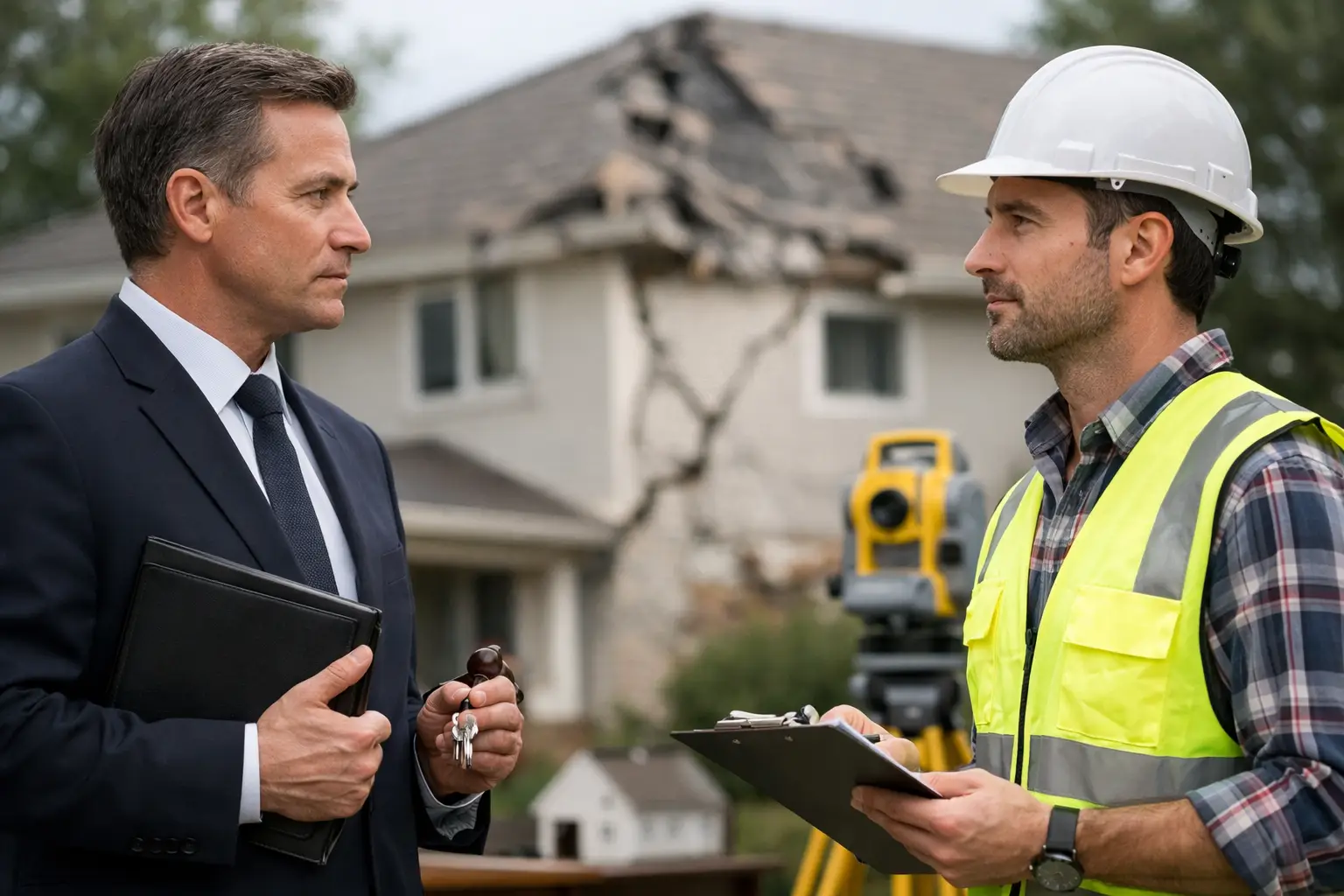
You discover serious cracking in the foundation three months after closing. The seller said nothing. The repair estimate is substantial. At that point, the question is not academic: property defect lawyer vs surveyor – who do you actually need, and when?
The short answer is that they serve different functions. A surveyor identifies, assesses, and documents the physical condition of the property. A lawyer analyzes rights, liability, evidence, and recovery options. In many defect disputes, one does not replace the other. The real issue is sequence, scope, and timing.
Property defect lawyer vs surveyor: different jobs, different risks
A surveyor works on the factual and technical side of the problem. If there is water intrusion, structural movement, faulty drainage, roof failure, or signs of earlier repairs, the surveyor examines what is present, how serious it appears to be, and in many cases whether the defect was likely visible or discoverable at the time of purchase. That technical assessment can become central evidence.
A property defect lawyer works on the legal consequences of those facts. Even a serious defect does not automatically create a valid claim. Liability depends on the contract, disclosure history, inspection records, the age and condition of the property, what a buyer could reasonably have expected, and whether the defect qualifies as hidden or undisclosed under the applicable legal standard.
This is where many property owners lose time and money. They assume that if a surveyor confirms a defect, the case is essentially won. It is not. A technical finding may show that damage exists, but legal recovery depends on proving who is responsible and why.
What a surveyor can do in a defect dispute
A qualified surveyor can often answer the first set of urgent questions. What exactly is wrong? How extensive is it? Does it appear old or recent? Are there signs of poor workmanship, long-term moisture, deferred maintenance, or patch repairs that suggest the issue existed before the sale?
That work matters because defect disputes are evidence-driven. If the problem is undocumented, or if emergency repairs begin before proper inspection, crucial proof can be lost. A careful surveyor can preserve the condition of the property in a way that supports later negotiations or legal action.
Just as importantly, a surveyor can help separate a true defect claim from buyer disappointment. Not every unpleasant discovery supports compensation. Older homes come with wear, prior alterations, and risk. A surveyor may conclude that the issue is consistent with the age and general condition of the property, or that warning signs were visible enough that a buyer should have investigated further. That may not be what a homeowner wants to hear, but it is still valuable early information.
What a lawyer adds that a surveyor cannot
A surveyor cannot pursue a claim, frame legal arguments, or negotiate liability on your behalf. That is where legal counsel becomes essential.
A lawyer reviews whether the facts actually support a claim against the seller or another responsible party. That analysis includes the sale agreement, property disclosures, pre-purchase inspection materials, photographs, messages between the parties, repair invoices, and the timeline of discovery. Small details matter. A seller’s statement that seemed harmless during the transaction can become highly relevant once a defect is uncovered.
A lawyer also evaluates causation and proof. If a defect appears after purchase, the key legal question is often whether it existed at the time of sale and whether it should have been disclosed or was reasonably discoverable. That is not only a construction issue. It is an issue of burden of proof, legal classification, and strategy.
There is also the question of remedy. Even where liability appears strong, disputes often turn on what can actually be recovered. Is the proper measure repair cost, diminished value, or something narrower? Are there procedural requirements, notice obligations, or limitation periods that could affect the claim? A surveyor does not answer those questions. A lawyer does.
When you should call a surveyor first
If the problem is newly discovered and the cause is unclear, a surveyor is often the right first step. That is especially true where the defect is physical, complex, or likely to worsen quickly, such as moisture damage, drainage failure, structural movement, roofing issues, or concealed alterations.
You need a reliable technical picture before anyone can assess liability with confidence. Without that, legal advice may remain preliminary. A lawyer can identify possible rights early, but if no one has established the condition of the property, the claim rests on assumptions.
There is one important caution. Do not wait too long to involve counsel if the financial exposure is significant. Technical investigation and legal protection should not become two separate tracks that never meet. Evidence should be gathered with future legal use in mind.
When you should call a property defect lawyer first
If the defect involves major financial consequences, if the seller may have known about the issue, or if communication has already become disputed, contact a lawyer immediately. The same applies if you are under pressure to repair quickly, notify insurers, or respond to denials from the other side.
Early legal advice can prevent costly mistakes. Homeowners sometimes contact the seller in anger, make allegations they cannot yet prove, authorize invasive repair work without preserving evidence, or accept partial explanations that later undermine the claim. In higher-value disputes, that can damage the case before it is properly assessed.
A lawyer can also help decide what kind of surveyor or expert is needed. Not every technical professional is equally suited to litigation-related work. Some are excellent at routine inspections but less effective when a report must stand up to close scrutiny in a dispute.
The strongest cases usually involve both
In practice, the strongest property defect claims often depend on coordinated input from both a surveyor and a lawyer. The surveyor establishes what happened at the property. The lawyer connects that evidence to legal liability and financial recovery.
That coordination is not a formality. The legal questions often shape the technical investigation. Was the defect likely present before the sale? Were there visible warning signs? Does the condition suggest concealment, temporary patching, or long-term neglect? Those points may need to be addressed clearly in expert findings rather than left to inference.
At the same time, the technical evidence may reshape the legal strategy. A case that initially appears strong can weaken if the defect looks discoverable during inspection, or if the condition is more consistent with post-sale deterioration. The reverse is also true. What starts as a routine repair issue can become a serious non-disclosure case once the physical evidence is properly documented.
Common misunderstandings in property defect lawyer vs surveyor decisions
One common misunderstanding is that a surveyor determines legal fault. A surveyor may provide powerful evidence, but legal responsibility is not a technical opinion alone. It is a legal conclusion based on facts, documents, and applicable standards.
Another is that a lawyer can proceed effectively without technical support. In some straightforward disputes that may be possible, but in many hidden-defect matters, the case depends on expert evidence. If the defect, age, and origin are uncertain, legal argument without technical grounding is vulnerable.
There is also a timing mistake that appears often: homeowners wait for a full repair plan before seeking legal advice. That can be risky. By the time the matter reaches a lawyer, the property may have been altered, communications mishandled, or deadlines shortened.
A practical way to decide
If your first question is, “What is wrong with the property?” start with a surveyor. If your first question is, “Who is legally responsible and what can I recover?” start with a lawyer. If both questions matter, and they often do, involve both early.
The more serious the defect, the less useful it is to think in terms of either-or. A surveyor helps establish the condition. A lawyer protects your position. One builds the factual foundation; the other turns that foundation into a claim.
For homeowners dealing with hidden defects after purchase, the real risk is not choosing the wrong professional in theory. It is waiting too long, relying on incomplete evidence, or assuming that technical proof and legal proof are the same thing. They are not.
If the stakes are high, treat the matter as both a property problem and a legal problem from the start. That is usually the clearest path to protecting your rights, your evidence, and your financial position. If you need that kind of focused legal assessment, a specialist practice such as Advokatdoldafel.se can help evaluate whether the defect supports a viable claim before the situation becomes harder to prove.
Fler artiklar
 General
Buyer Rights vs Seller Liability in Home Sales
Understand how buyer rights vs seller liability affect hidden-defect claims, notice deadlines, evidence, and potential recovery after a residential home purchase.
 General
Ersättning fastighetsfel for Homebuyers
Learn when ersättning fastighetsfel may be available, what evidence supports a property-defect claim, and why prompt legal action protects your position.
 General
Guide till ersättningskrav vid husköp Explained
A guide till ersättningskrav vid husköp explains how to document hidden defects, notify the seller, value your loss, and protect your legal position today.